Journal Estate sales
How to Get Your Home Ready for an Estate Sale
What to set aside, what to leave exactly where it is, and what to expect when the walkthrough begins.
Getting a home ready for an estate sale is mostly about what you take out, not what you tidy up. Set aside what the family is keeping, go through the papers and photographs, and leave everything else where it is, including the things that look like junk. Here is how I’d prepare a house in Erie County for an estate sale, and what to expect when we walk through it together.
Start with what the family is keeping
Deciding what stays in the family is the first job, and usually the slowest. Give everyone a date to claim what they want, and hold to it. Once the walkthrough starts, anything left in the sale rooms is simplest to treat as for sale.
Move what you’re keeping out of the house if you can. If you can’t, gather it in one room or closet that stays shut during the sale, and label the door. One “not for sale” room is far easier to manage than sticky notes on twenty pieces of furniture.
Don’t throw anything away yet
The instinct before a sale is to clean out. Resist it until after the walkthrough. Estate sale buyers go through basements, garages and kitchen drawers on purpose, and the things families bag up for the curb are often the things that sell:
- Tools and hardware, down to the jars of screws and the workbench itself.
- Kitchen basics: cast iron, mixing bowls, old utensils, small appliances.
- Holiday decorations, sewing and craft supplies, linens and fabric.
- Clothing, especially older pieces and whole closets of it.
- Boxes, manuals and cords for toys, games and electronics. A box can matter as much as what came in it.
- The junk drawer. Leave it as it is.
Tools, household goods and clothing collections are among the categories that consistently draw buyers at Erie County sales. Throw out food, real trash and anything broken past use; leave the rest to be seen.
Papers and photographs
Go through the papers yourself, before anyone else does. Look in desks, filing cabinets, closet shelves, coat pockets, purses and between the pages of books. You’re looking for:
- Wills and trust papers
- Deeds and vehicle titles
- Insurance policies
- Bank and investment statements
- Tax returns
- Savings bonds and stock certificates
- Birth, marriage and military papers
- Keys, and anything naming a safe deposit box
Shred whatever carries account or Social Security numbers and isn’t needed, rather than leaving it in a drawer for a stranger to open.
Family photographs, slides, home movies and letters go in the keep pile, even when nobody is sure yet who wants them. Store them somewhere cool and dry while the sale happens. The National Archives steers family papers away from damp basements, garages and hot attics, and away from rubber bands and ordinary paper clips, which stain, stick and rust.
What shouldn’t be in the sale
- Medications. Prescription and over-the-counter medicines don’t belong in a sale. Pennsylvania keeps a statewide map of drug take-back boxes, many of them hosted by law enforcement, and no ID is needed to drop off.
- Firearms. Set them aside before the walkthrough. For firearms that are part of an estate, the Pennsylvania State Police says the executor or administrator distributes them, and suggests talking to an attorney about how.
- Personal documents, and anything else with someone’s private information on it.
- Anything already promised. If a neighbor was told they could have the snowblower, take it out of the sale now.
If you’re settling an estate
When a sale follows a death, the legal side comes first. In Erie County, the Register of Wills probates wills and processes estates. Its staff can’t give legal advice, so questions about what can be sold, and when, belong with an estate attorney, and questions about taxes with an accountant.
Pricing for a sale is not an appraisal. If you need a formal valuation of something, for an estate, insurance or dividing things among family, hire an independent appraiser before the sale.
Getting your home ready on time
- Work back from your deadline. If the house is being sold, the sale has to finish, and the leftovers be gone, before the closing. Tell me the date at the first call.
- Leave the furniture where it is. Empty rooms don’t help. Tables, shelves and dressers are for sale, and they’re display space too.
- Keep the lights, heat and water on through the sale.
- Don’t book a dumpster first. Whatever is left after the sale is removed at no charge.
- Don’t wait for perfect weather. A collector’s sale in North East drew a line of buyers through heavy rain and wind.
What to expect from the walkthrough
The walkthrough is where a sale starts. I walk through the home with you, look at everything that’s going and price it to sell. You can be as involved in pricing as you like: some clients want a say on every piece, others would rather hand it over. Have three things ready:
- Your deadline, and any days the house isn’t available.
- The keep list, so we both know which rooms and pieces are out of the sale.
- The stories. If you know where something came from, or still have its box or paperwork, say so. It helps price things fairly.
With Better Selling With Bailey, the terms are agreed before the sale: a $995 flat fee plus 20% of total sales. To see what you’d keep at a given total, try the calculator. Staging, promotion, the sale days and cleanup follow; how an estate sale works goes through each step. If you’re still deciding whether you need an estate sale at all, see estate sale or garage sale.
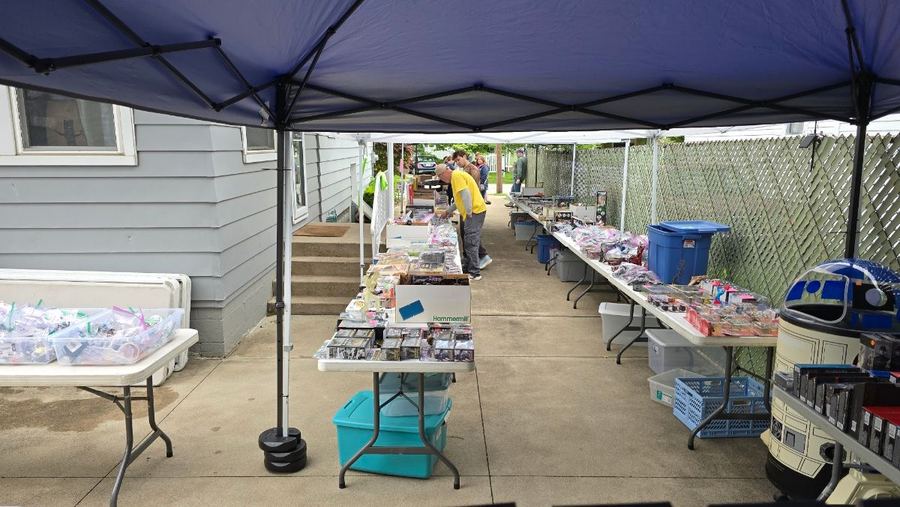
Photograph by clients Ben and Andy Nagle, from their Google reviews.